
Suction electrolyte hydrometer analysis instrument densitometer tool for lead-acid battery fluid testing with 1.1-1.3 measurement range, ABS plastic construction, 0.9* accuracy, handheld 45mm x 100mm x 135mm portable design


Suction electrolyte hydrometer analysis instrument densitometer tool for lead-acid battery fluid testing with 1.1-1.3 measurement range, ABS plastic construction, 0.9* accuracy, handheld 45mm x 100mm x 135mm portable design
Handheld Suction Hydrometer for Lead-Acid Battery Electrolyte Testing and Maintenance
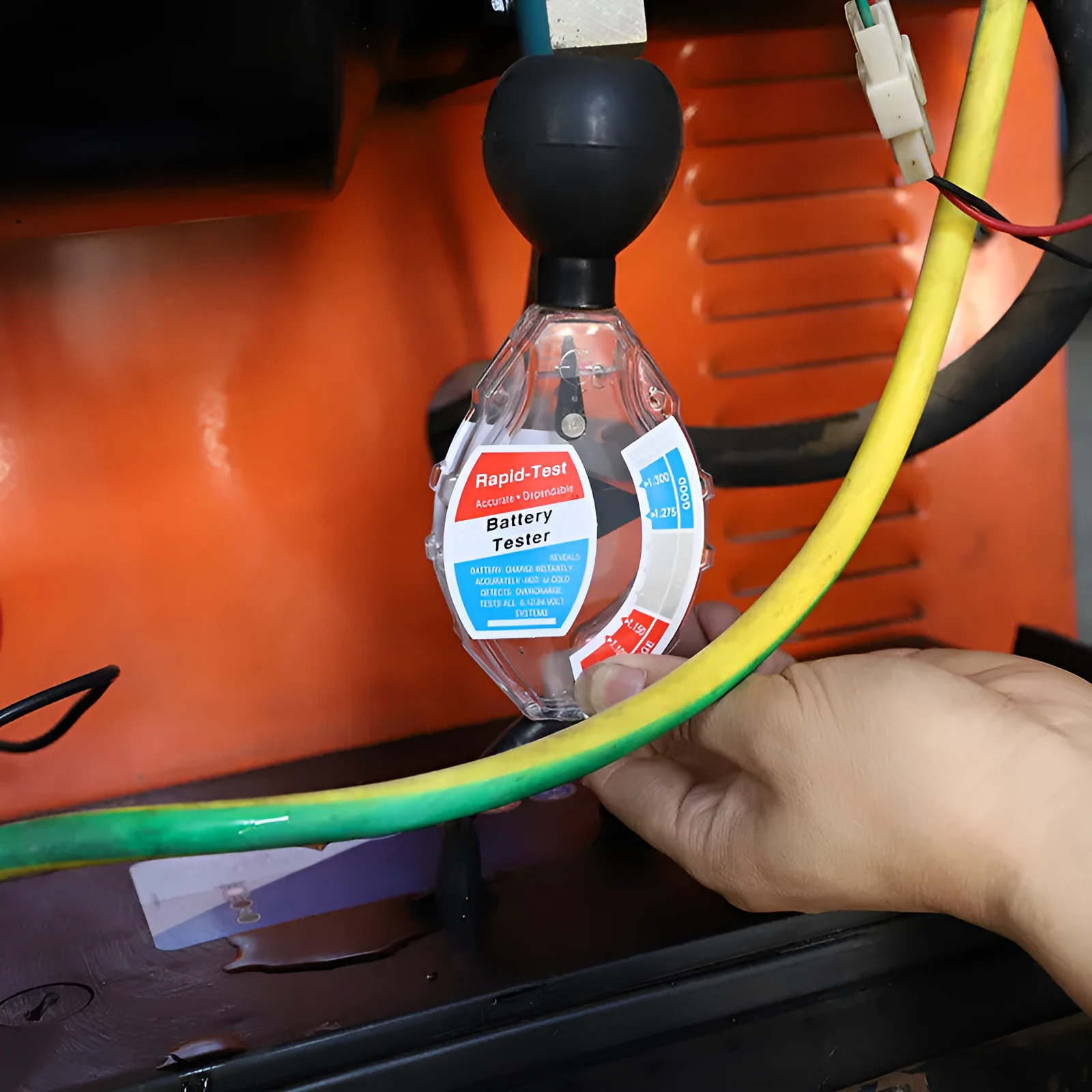
This suction electrolyte hydrometer is a specialised densitometer tool designed for one core task: measuring the specific gravity of lead-acid battery fluid. It provides vehicle owners, mechanics, and technicians with a direct, on-the-spot method to assess a battery's state of charge and overall health without complex equipment. By drawing a small electrolyte sample into its chamber, the instrument gives a clear float reading against a calibrated scale. Its compact, handheld format and operation without external power make it a practical choice for garage workshops, automotive diagnostics, and routine battery maintenance checks where understanding electrolyte concentration is key.
Features and Construction
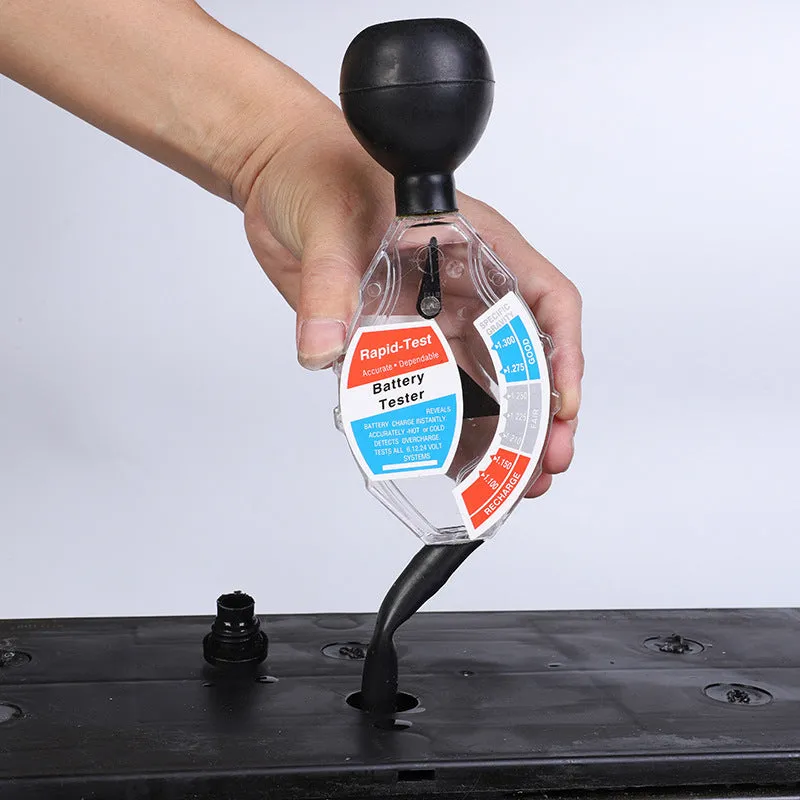
The tool's design centres on functionality for its specific use case. Its construction and measurements are defined to offer a portable solution for battery testing, with material choices suited to the task.
Material and Build
The hydrometer is built from ABS plastic, a material selected for its combination of lightweight properties and chemical resistance. This makes the tool durable enough for occasional handling of battery acid during the sampling process while keeping its overall weight low at just 108 grams. The plastic construction contributes to the instrument's affordability and suitability as a handheld diagnostic device. The design incorporates a suction bulb or mechanism, which is the primary method for drawing the electrolyte sample safely into the measurement chamber.
Size and Practical Fit
With dimensions of 45mm in width, 100mm in depth, and 135mm in height, the hydrometer is a genuinely portable instrument. This size allows it to be easily carried in a toolbox, stored in a vehicle's glove compartment, or kept on a workshop shelf without occupying significant space. Its form factor is designed to be held comfortably in one hand during the sampling and reading process. The compact nature supports its role as a quick-check tool for battery maintenance rather than a fixed laboratory instrument.
Uses and Placement
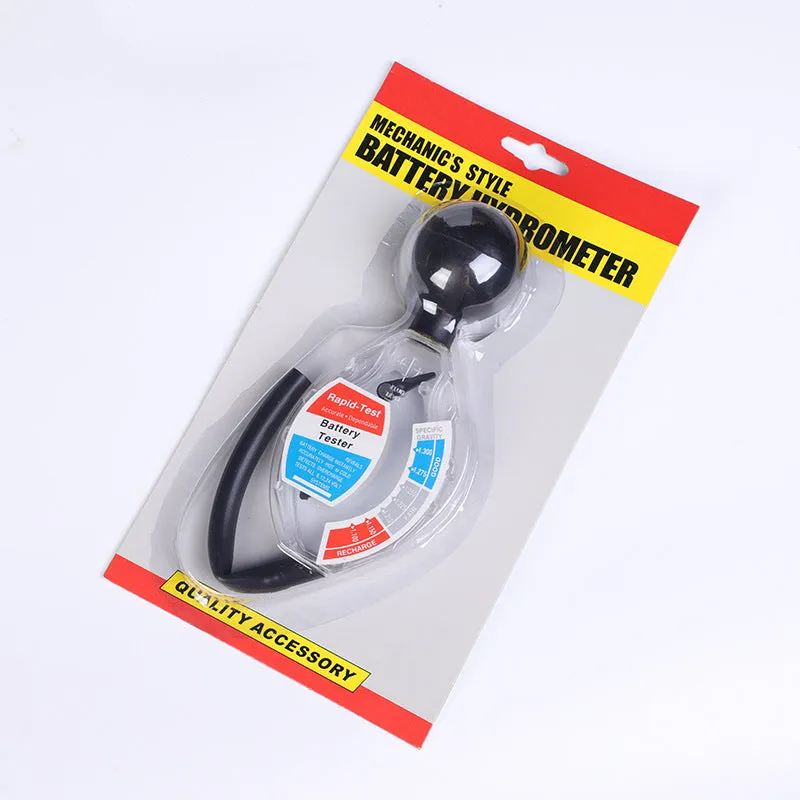
The tool has a defined application scope based on the available specifications. Its use is targeted, making it suitable for specific professional and personal maintenance scenarios.
Event or Professional Use
In professional automotive or marine workshop settings, this hydrometer serves as a basic diagnostic tool for assessing lead-acid batteries in cars, trucks, motorcycles, boats, and forklifts. Mechanics can use it during service intervals to check individual cell condition, identify weak cells, or verify recharge success. It is also applicable for fleet maintenance teams monitoring the health of vehicle batteries or for solar power system installers checking the state of off-grid battery banks that use lead-acid technology. The tool provides a quantitative check to support visual inspections.
Everyday Home Use
For home users and DIY enthusiasts, the hydrometer offers a way to perform basic maintenance on car, motorcycle, or lawn tractor batteries. It can help determine if a seemingly dead battery can be recovered with a recharge or if it requires replacement due to sulphation or cell failure. Homeowners with backup power systems or recreational vehicles (RVs) equipped with lead-acid batteries can also use it for periodic health checks. The simple operation—suck, read, rinse—makes it accessible for those following battery care guides without needing advanced technical skills.
Benefits and Buying Value

The value of this instrument lies in its focused functionality and the practical maintenance advantages it enables, based on its stated design parameters.
Reuse and Low Maintenance
The hydrometer is a reusable tool designed for multiple tests over time. Its maintenance is minimal, primarily involving rinsing with water after use to prevent acid residue from damaging the plastic or affecting future readings. There are no consumable parts or batteries to replace, which contributes to its long-term utility as a one-time purchase for regular battery monitoring. For users who perform seasonal battery checks or troubleshoot multiple vehicles, the tool pays for itself by helping extend battery life and avoiding premature replacements.
Why Choose This Product
This suction hydrometer is chosen for its specific application to lead-acid battery testing, its defined 1.1–1.3 measurement range, and its straightforward, mechanical operation. It provides a concrete numerical reading (specific gravity) that is more reliable than guessing based on voltage alone. The tool is suitable for users who need a dedicated, portable instrument for this task without the complexity or cost of electronic testers. Its value is in delivering a core diagnostic function—electrolyte density measurement—in a simple, durable, and affordable format.
