M.2 solid state hard disk docking station copier with dual protocol support SATA and NVMe for cloning backup SSD drives, includes power adapter and USB C to C and USB C to A data cables for PC laptop desktop data transfer


M.2 solid state hard disk docking station copier with dual protocol support SATA and NVMe for cloning backup SSD drives, includes power adapter and USB C to C and USB C to A data cables for PC laptop desktop data transfer
MAIWO K3016 M.2 Solid State Hard Disk Docking Station for SATA and NVMe SSD Cloning and Backup

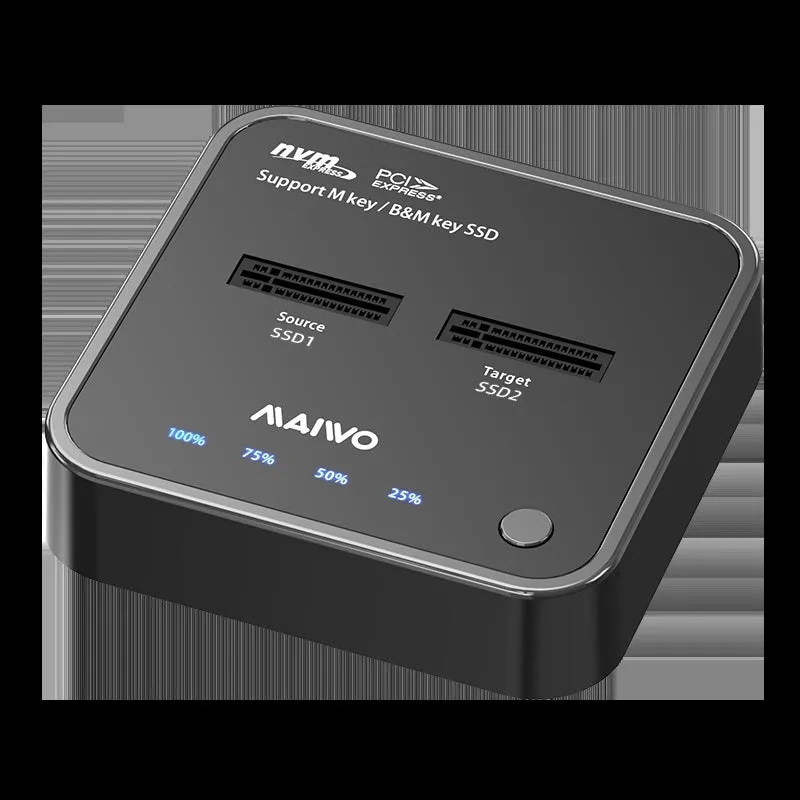
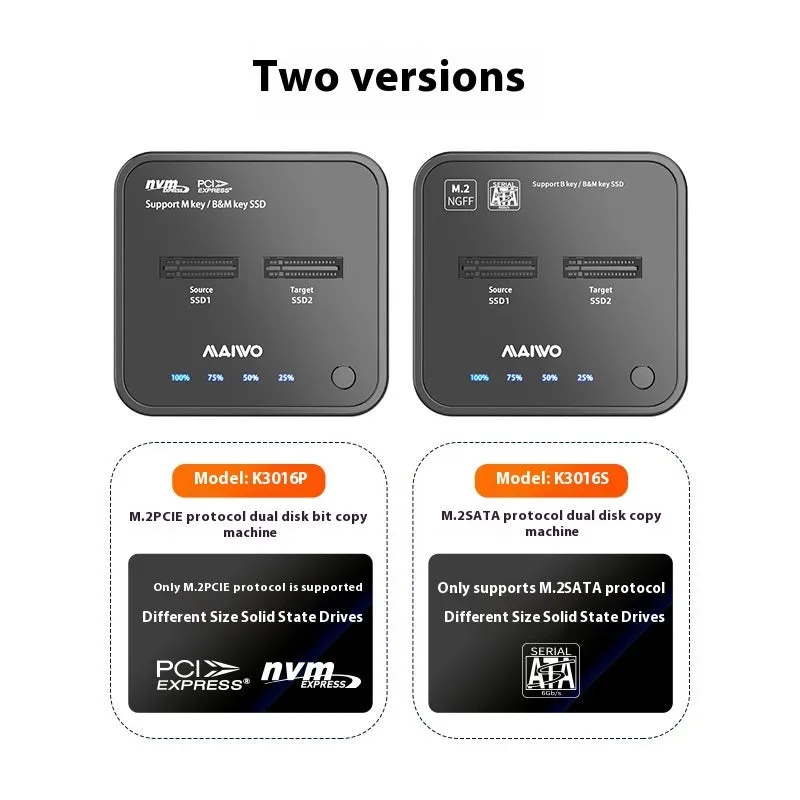
The MAIWO K3016 series M.2 hard disk docking station serves as a practical external enclosure and cloning solution for modern solid state drives. Designed to handle both SATA and NVMe protocol M.2 SSDs, this device allows users to clone drives, create backups, or access data without installing the drive internally in a computer. It connects to your PC or laptop via the included USB C cables, making it suitable for data recovery, system migration, or straightforward file transfers between systems. The inclusion of a power adapter ensures sufficient power delivery for consistent read/write operations during cloning tasks. Available in specific model variants for different protocols and regional power standards, it provides a functional approach to drive management.
Features and Construction

The MAIWO K3016 docking station is built around core functionality for M.2 solid state drive handling. Its design prioritises direct connection and cloning capability over internal installation complexity. The unit is supplied with all necessary cables and a power adapter, creating a complete kit for immediate use. This section covers the physical build and operational features that define its practical application.
Material and Build
Constructed from ABS plastic, the docking station housing provides a durable and lightweight enclosure for the internal electronics. This material choice offers adequate protection for the components while maintaining a practical form factor for desktop use. The device follows an OEM processing method, indicating standardised manufacturing for reliable performance in its designated cloning and data transfer functions. The construction focuses on functional reliability for the task of reading from and writing to M.2 SSD drives.
Size and Practical Fit
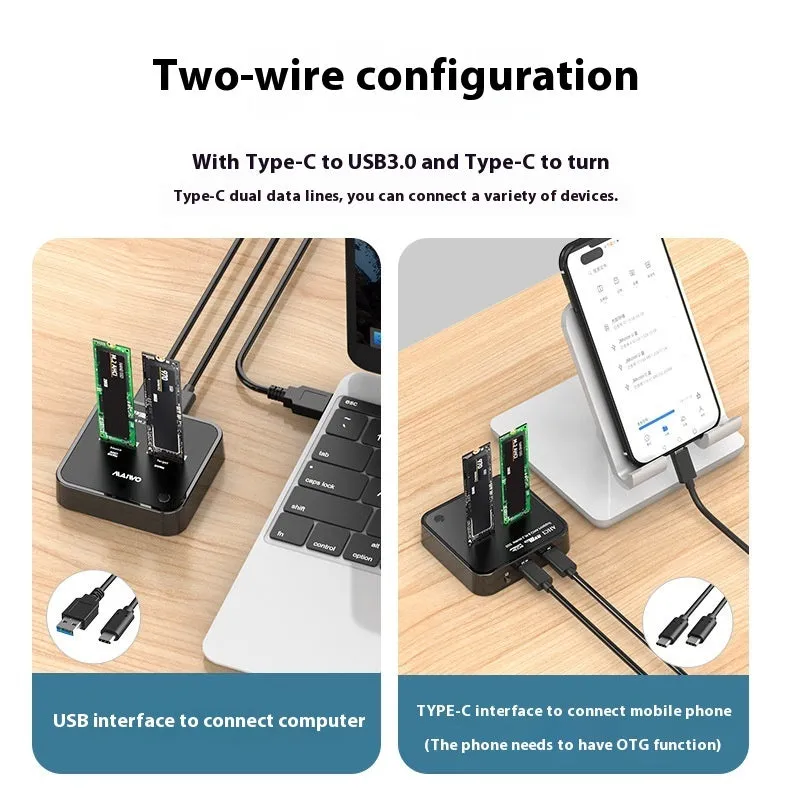
While exact dimensions are not specified, the design accommodates standard M.2 form factor solid state drives. The docking station's external nature means it occupies space on your desk or workspace rather than inside a computer case. Its connectivity relies on the included cables, with the USB C to C and USB C to A options providing flexibility for different computer ports. The inclusion of regional power adapters (US, UK, European standards) ensures compatibility with local electrical supplies, making it suitable for international use or purchase.
Uses and Placement

This docking station addresses specific scenarios involving M.2 solid state drive management. Its primary function centres on cloning and data transfer operations that benefit from external access to drives. The device finds application in both occasional home use and more systematic professional contexts where drive duplication or data migration is required. Understanding these use cases helps clarify its position as a tool rather than a permanent storage solution.
Event or Professional Use
For IT professionals, system builders, or repair technicians, the MAIWO K3016 provides a straightforward method for cloning client drives, deploying multiple systems with identical configurations, or recovering data from faulty M.2 SSDs. The dual protocol support means a single unit can handle both SATA and NVMe drives commonly found in modern laptops and desktops. The ability to operate independently of a computer's internal bays allows for quick drive swaps and cloning sessions without opening chassis. This can streamline workflow in environments where multiple drives need imaging or where system upgrades involve transferring data to new NVMe or SATA M.2 drives.
Everyday Home Use
Home users upgrading their computer's storage can use this docking station to clone their existing M.2 SSD to a new, larger capacity drive without reinstalling their operating system and applications. It also serves as an external dock for occasionally accessing spare M.2 drives for additional storage or backup purposes. The included cables offer connection options for modern computers with USB C ports or older systems with USB A ports. The auxiliary charging capability of the USB C to A cable adds minor utility for charging smartphones or tablets, though this is secondary to the main data transfer function.
Benefits and Buying Value

The value proposition of this product lies in its focused functionality and complete kit approach. By providing both protocol options and regional power adapters, it reduces compatibility concerns. The benefits stem from practical time savings and convenience compared to software-only cloning solutions or internal drive installation methods. This section examines why this specific docking station represents a considered choice for its intended tasks.
Reuse and Low Maintenance
As a tool rather than consumable, the docking station can be reused for multiple cloning projects over time. Its support for both SATA and NVMe protocols extends its useful life as drive technology evolves. Maintenance is minimal beyond basic care of the cables and connectors. The ABS plastic housing is resistant to everyday knocks and scratches that might occur during use on a workbench or desk. The device has no moving parts apart from connectors, reducing points of failure compared to mechanical hard drive docking stations.
Why Choose This Product
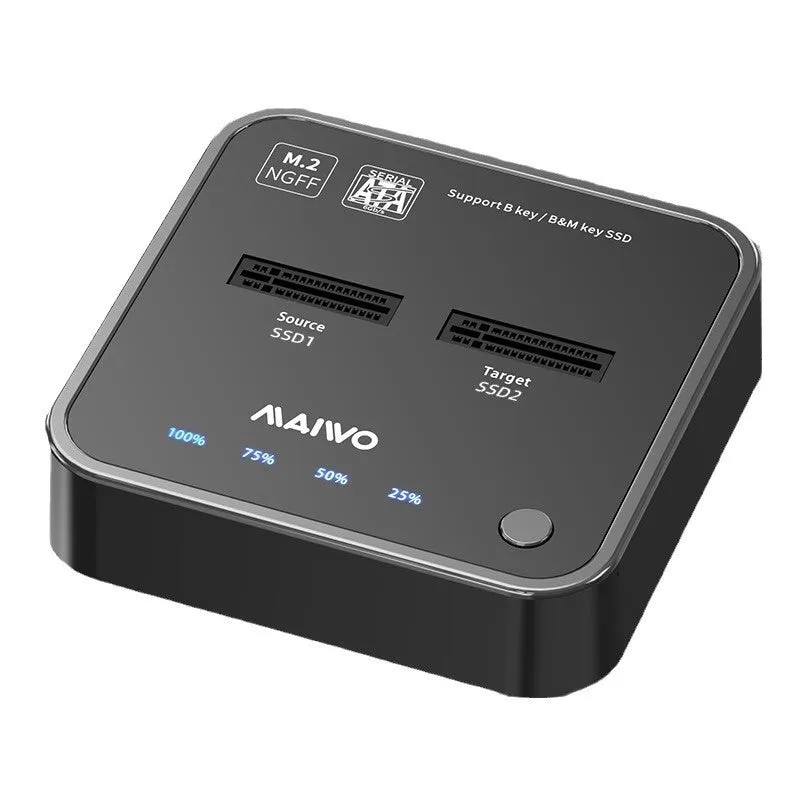
Selecting the MAIWO K3016 is appropriate when you need a straightforward, external solution for M.2 SSD cloning that includes all necessary cables and power adapters. The clear model differentiation between SATA (K3016S) and NVMe (K3016P) protocols, each with regional power variants, allows precise matching to your drive type and location. It eliminates guesswork about cable compatibility or power requirements. For users who periodically need to clone drives, migrate systems, or access M.2 SSD data externally, this docking station provides a complete, ready-to-use package that performs its defined function without unnecessary complexity.